Brossard · South Shore · Updated October 17, 2026
Asbestos Removal in Brossard
In Brossard, more than half of single-family houses were built before 1981, and asbestos can turn up in their ceilings, floors or attic insulation. Have materials tested before you renovate or insulate, then hire a partner contractor in your area with its own RBQ licence for asbestos removal.
On this page
Brossard housing at a glance
Statistics Canada, 2021 Census
Half of houses built between 1961 and 1980. The older a house, the more likely it is to contain asbestos-based materials.
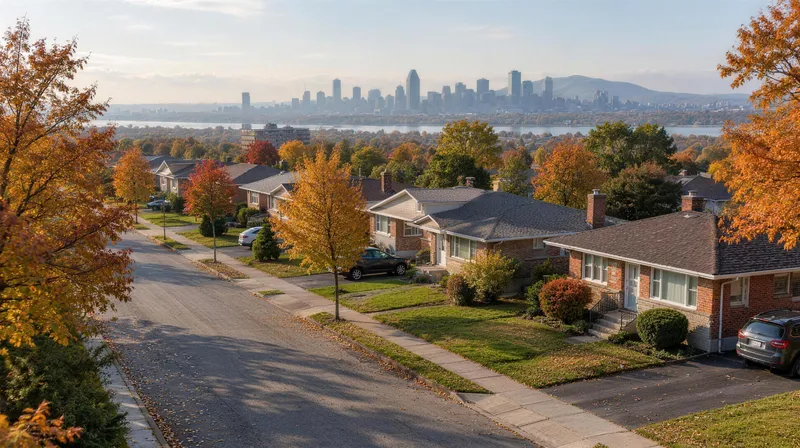
Brossard grew very quickly after the Champlain Bridge opened in 1962. As a result, many of its houses date from a time when asbestos still went into everyday building materials. If you're worried about asbestos in a Brossard home, know this first: Québec.ca says intact, non-friable materials that are left undisturbed are generally safe. Renovation is what changes things, especially work in the attic. This page gives English-speaking homeowners the local details in English.
Brossard's housing stock
Statistics Canada's 2021 Census paints a more mixed picture than in Longueuil. Across all dwelling types, 39.5% of occupied dwellings in Brossard were built before 1981, and 56.1% before 1991. Among single-family houses, though, the share built before 1981 rises to 55.6%. About half of those houses went up between 1961 and 1980.
In other words, if you live in a single-family house rather than a recent condo, there is a better than even chance your home predates 1981. The historic chemin des Prairies area holds some of the city's older buildings, but a house's age has to be checked address by address. The property assessment roll usually shows the year of construction.
In a house from that era, the materials to check before renovating are mainly textured ceilings, vinyl tiles and their adhesive, joint compound, pipe insulation and attic insulation. Only an asbestos test at a lab can confirm what they contain.
Renovation permits in Brossard
Brossard stands out on one point: the City requires a permit for insulation work. That matters, because attic insulation is often a homeowner's first project to cut heating bills.
Before insulating, look at what's already up there
Before you apply, take a look at the existing insulation without touching it. Light, pebbly, grey-brown loose fill looks like vermiculite. Québec.ca says some vermiculite sold between 1920 and 1990 may contain asbestos. Health Canada notes that much of it came from the Libby mine in Montana and was sold under the Zonolite brand.
If you see it, Health Canada advises:
- leave it undisturbed and don't try to remove it yourself;
- don't store items in the attic;
- repair any cracks or holes in the walls and ceilings;
- hire professionals trained to handle asbestos.
Rénoclimat: what's covered and what isn't
Rénoclimat, Québec's home energy-retrofit program, pays $50 to $1,500 for attic insulation when at least 20% of the roof area is insulated. Rénoclimat changed its terms on October 1, 2026 and no longer books pre-work energy evaluations under the old terms: check the current conditions on Québec.ca before planning the re-insulation. Vermiculite removal is not eligible, since it does not improve energy efficiency. No grant covers asbestos removal to our knowledge; the re-insulation that follows may qualify for Rénoclimat. If the vermiculite contains asbestos, the blower-door test (the home's airtightness test) is skipped and the owner signs a waiver.
So the right order is: test the insulation, remove it if needed, then re-insulate with a permit. Adding new insulation on top without testing can complicate a future removal. Permit requirements depend on the work: see the City of Brossard insulation permit page and check with your municipality before starting work.
Where asbestos debris goes in Brossard
Brossard is part of the Longueuil agglomeration and shares its écocentres (municipal drop-off centres). Asbestos is not on the list of accepted materials; call 311 if you have questions. A homeowner should never bring asbestos debris there.
Waste handling is part of the contractor's job. Debris is wetted or HEPA-vacuumed, sealed in labelled containers, then taken to an authorized landfill. The same goes for attic insulation: vermiculite insulation must be handled as asbestos waste by the contractor.
Services in Brossard
A partner contractor in your area, with its own Régie du bâtiment du Québec (RBQ) licence, can take care of:
- vermiculite insulation removal and attic insulation removal before re-insulating;
- asbestos removal from ceilings, floors or walls, under containment;
- sampling for an asbestos test at a lab.
Québec.ca strongly discourages doing this work yourself. To choose a contractor, check its RBQ licence (subclasses 1.2, 1.3, 2.7 or 7) and its workers' asbestos training. The asbestos removal cost depends mostly on the area and the type of material. For a figure that fits your house, request a quote.
Neighbouring cities
The network also covers the cities near Brossard. See our pages on asbestos removal in Longueuil and asbestos removal in Châteauguay.
Frequently asked questions
Do I need a permit to insulate my attic in Brossard?
Yes. Brossard requires a permit for insulation work. If the attic already holds vermiculite, have it tested before you apply, because removing it is a separate job. Check with your municipality before starting work.
Where does asbestos waste go in Brossard?
Brossard uses the Longueuil agglomeration's écocentres, where asbestos is not on the list of accepted materials; call 311 if you have questions. The contractor doing the removal takes the debris to an authorized landfill.
My Brossard house was built before 1981. Is there a danger?
Not if the materials are intact and you're not doing any work: Québec.ca says they are then generally safe. The risk comes with drilling, sanding or demolition. Have suspect materials tested before you renovate.
Does the vermiculite in my attic contain asbestos?
It may. Québec.ca says some vermiculite sold between 1920 and 1990 may contain asbestos. Leave it undisturbed, don't store anything in the attic and hire trained professionals to test or remove it.
Sources
- Statistics Canada — 2021 Census, table 98-10-0233-01 (occupied private dwellings, including period of construction)
- City of Brossard — Applying for an insulation permit
- City of Longueuil — Agglomeration écocentres (in French)
- Québec.ca — Preventing health problems associated with asbestos
- Health Canada — Advisory: vermiculite insulation may contain asbestos (archived, 2004)
- Health Canada — Health risks of asbestos
- Québec.ca — Rénoclimat insulation grant (in French)
- Transition énergétique Québec — Rénoclimat participant guide, November 2024 (in French)
Updated
Free quote
A quote in Brossard, from a contractor in your area.
Describe your situation in two minutes. Your request goes to a partner contractor in your area only and is never resold.