Mould · Updated October 17, 2026
Mould Removal: When to Call a Professional and What to Budget
Professional mould removal is recommended when the affected area is larger than 1 m², when patches are numerous or hard to clean, or when the mould keeps coming back. Indicative prices in Québec run from about $1,500 for a small area to $10,000 or more for a large one.
On this page
A patch of mould doesn't always call for professional mould removal. But beyond a small area, or if it keeps coming back, the job is safer in the hands of a specialized firm. (Whether you spell it mould or mold, the advice is the same.) This page explains where the line is, how a mould removal job works, what changes in a basement and what to budget.
Professional or do it yourself: the 1 m² rule
Health Canada and Québec.ca use the same yardstick: the size of the affected area.
Small area, under 1 m² (about 10 sq ft). Health Canada says you can clean small patches on non-porous surfaces, such as glass, metal, plastic or vinyl, with soap and water. Québec.ca suggests a clean cloth and an all-purpose cleaner. Wear protective goggles, rubber gloves and a dust mask. Bleach is not necessary.
Larger area. "If the area is larger, you should hire a professional," says Health Canada. Québec.ca recommends calling in a specialized firm when the affected surfaces are:
- large, meaning over 1 m²;
- numerous;
- hard to clean;
- or when the mould comes back after cleaning.
Québec.ca also says to discard porous, water-damaged items such as drywall, carpet, insulation and mattresses. They can't be cleaned deep down.
Seeing white strands, rust-coloured dust or wood that cracks into cubes? That may not be ordinary mould but dry rot, called mérule pleureuse in Québec. See our dry rot guide (in French). The 1 m² rule does not apply to dry rot.
The steps of a mould removal job
The work is done by a partner contractor in your area with its own Régie du bâtiment du Québec (RBQ) licence. A typical job follows these steps:
- Inspection. The contractor maps the affected areas, measures moisture in the materials and looks for the water source.
- Containment. The area is sealed off from the rest of the house, often with polyethylene, to limit the spread of spores. Spores are the tiny particles mould uses to reproduce.
- Removing damaged porous materials. Drywall, insulation, carpet or trim that is too damaged is removed and bagged.
- Cleaning. Surfaces that stay are cleaned, then vacuumed with a HEPA vacuum. A HEPA filter is a high-efficiency filter that traps very fine particles.
- Drying. Materials are dried, sometimes with dehumidifiers, before anything is closed up.
- Fixing the cause. Leak, seepage, drain or ventilation: the water source gets fixed.
- Restoration. Removed materials are replaced.
What to expect during the work
- The area is closed off. Stay out, and keep children and pets away.
- Equipment runs. Vacuums, fans and dehumidifiers may run for several days to dry the materials.
- Walls may be opened. The contractor sometimes has to remove more drywall than planned to reach the whole wet area. A good quote explains how surprises are billed.
- Restoration is not always included. Ask whether the quote covers new drywall, paint and flooring, or only removal and cleaning.
Talk to your insurer early, especially after water damage or a sewer backup. They may ask for photos and a report before work starts.
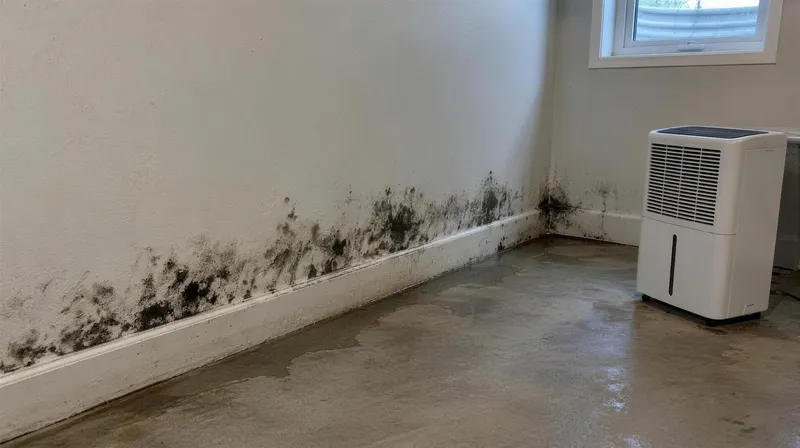
Basement mould removal
The basement is the most common trouble spot. It sits close to the ground, stays cooler and is exposed to water. Health Canada lists flooding, water seepage, leaking pipes and sewage backups among the causes of mould. Québec.ca adds that regular condensation on windows or walls may mean the humidity is too high.
In a basement, mould removal often involves:
- the bottom of drywall walls and the insulation behind them;
- floating floors or carpet laid on concrete;
- trim and door frames;
- closed storage spaces where air barely moves.
According to Soumission Rénovation, basement mould removal starts around $3,500 and can exceed $8,000 (indicative, October 2026).
Walls and attic
Walls. Mould on an exterior wall or at the bottom of a wall often points to seepage or condensation on a cold surface. If it covers more than 1 m² or comes back, the inside of the wall is probably affected too. Our page on mould in the house (in French) covers causes and solutions.
Attic. Mould on the roof sheathing mostly comes from poor ventilation, condensation or a roof leak. If the insulation has to come out as well, see attic insulation removal.
Mould removal cost
The prices below are ranges seen in Québec. They vary with access, the materials to remove and the repairs needed.
| Work | Indicative price |
|---|---|
| Small area, under 10 sq ft | $1,500 to $2,500 |
| Medium area, 10 to 100 sq ft | $2,500 to $5,500 |
| Large area, over 100 sq ft | $6,000 to $10,000 and up |
| Attic | $2,500 to $6,000 |
| Basement | from $3,500, can exceed $8,000 |
| Basic inspection with 1 or 2 air samples | $250 to $450 |
Indicative, October 2026. Source: Soumission Rénovation, cost of mould decontamination (July 2026) and price of a mould test (September 2026).
What moves the price:
- the affected area and the number of rooms;
- the materials to remove: drywall, insulation, flooring;
- access: finished basement, crawl space, low attic;
- fixing the cause: drain, waterproofing, ventilation, plumbing, often billed separately;
- restoration after removal.
Mould testing: useful or not?
A test isn't always needed. If the mould is visible and the cause is known, the work can start right away. A test helps when you smell mould but can't see it, or to check the result after removal. A basic inspection with 1 or 2 air samples costs $250 to $450, indicative.
Mould and your health
Health Canada lists irritated eyes, nose or throat, watery eyes, sneezing, trouble breathing and worsened asthma among the effects of mould. Québec.ca notes that children and people with asthma or allergies are more vulnerable, and advises against cleaning while others are in the room. If you have symptoms, see your doctor or call Info-Santé 811.
Choosing a contractor and getting a quote
Before you sign, check:
- the contractor's RBQ licence and liability insurance;
- that the quote describes containment, removal, HEPA cleaning and drying;
- that the cause of the moisture is named, with the proposed fix;
- what restoration is included.
Compare at least two quotes that describe the same work. To be matched with a partner contractor in your area, request a free quote.
South Shore / Montérégie
Mould removal in your city
Each local page covers the housing stock, where asbestos debris goes and the permits to plan for.
Frequently asked questions
How big does a mould problem have to be before I need a professional?
Health Canada says to clean only small patches under 1 m² on non-porous surfaces yourself, with soap and water. For larger areas, you should hire a professional. Québec.ca also recommends a specialized firm when patches are numerous, hard to clean or come back after cleaning.
How much does mould removal cost?
Indicative, October 2026: $1,500 to $2,500 for under 10 sq ft, $2,500 to $5,500 for 10 to 100 sq ft, and $6,000 to $10,000 or more above 100 sq ft, according to Soumission Rénovation. The real price depends on access, the materials to remove and the cause to fix.
Do I need bleach to clean mould?
No. Québec.ca says bleach is not necessary for ordinary cleaning. For a small patch on a non-porous surface, soap and water or an all-purpose cleaner is enough.
Do I need a mould test before removal?
Not always. If the mould is visible and the cause is known, you can go straight to removal. A test helps when you smell mould but can't see it. A basic inspection with 1 or 2 air samples costs $250 to $450, indicative.
Can mould come back after removal?
Yes, if the cause is not fixed. A leak, seepage, condensation or high humidity will let mould grow back. Proper mould removal always includes finding and fixing the water source.
Is mould dangerous to my health?
Health Canada lists irritated eyes, nose or throat, sneezing, trouble breathing and worsened asthma. Québec.ca notes that children and people with asthma or allergies are more vulnerable. If you have symptoms, see your doctor or call Info-Santé 811.
Sources
- Health Canada — Mould (infographic)
- Québec.ca — Finding and eliminating mould from your home
- Soumission Rénovation — Cost of mould decontamination in Québec, July 2026 (in French)
- Soumission Rénovation — Price of a mould test in Québec, September 2026 (in French)
- Québec.ca — Preventing health problems associated with asbestos
Updated
Free quote
Talk to a qualified contractor in your area.
Describe your situation in two minutes. Your request goes to a partner contractor in your area only and is never resold.